
2G and 3G networks are shutting down. Are you prepared?

Important date to note: on December 1, 2025, Telenor and Tele2 will shut down their 2G networks, and on the same day, the final parts of their 3G networks will be decommissioned. Telia is phasing out its 2G network during 2027 and will gradually shut down parts of its 3G network as early as 2025. Companies and systems still relying on 2G or 3G must therefore act immediately to avoid downtime, loss of coverage, or disruptions to critical functions.

Why is this relevant to you?
  • Many older communication and monitoring systems, alarm systems, office or infrastructure phones, and remote-controlled devices still use 2G/3G.
  • When the networks are shut down, they will cease to function entirely—analog telephony via GSM/2G or equipment with only a 3G module will lose connection.
  • To avoid interruptions, an upgrade to newer technology such as LTE/4G is required—which is more stable, offers better coverage, and provides long-term access to support.

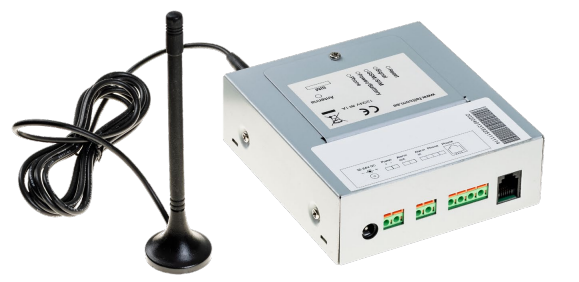
Example of a solution from Malux: GSM Module / 4G/LTE Gateway

To manage the transition and replace older 2G/3G-connected devices, the Malux GSM Module / 4G/LTE Gateway can be a direct and practical solution. This product supports:

  • Connecting an analog telephone to the GSM network through the device; analog telephones both with and without keypads can function if the gateway’s hotline feature is activated.
  • It is upgraded to 4G/LTE, meaning it will continue to function after the 2G/3G networks are shut down.
  • The product is delivered with a suitable antenna (with a magnetic base), power adapter (230 VAC / 12 V DC), and manual. An external antenna is available as an accessory to improve signal strength in areas with weak reception.

This allows organizations with older telephony or alarm systems to migrate relatively smoothly to a modern, functioning connection without replacing all equipment at once.

Advantages of LTE technology

Switching to LTE/4G offers several advantages over older networks:
  • Higher capacity – handles more data transfer for everything from machine control to monitoring.
  • Lower latency – provides faster response times and real-time communication, which is crucial for alarms, control systems, and traffic solutions.
  • IP-based connectivity – modern infrastructure that provides more stable and secure communication.
  • Long lifespan – 4G/LTE will remain the primary network for IoT and M2M for many years to come, even as 5G is rolled out.

Malux helps you every step of the way

We offer consulting, products, and solutions for a smooth transition to 4G/LTE and, eventually, 5G. Our experts help you identify risks, suggest the right solution, and ensure your system operates without interruption.

Contact us at Malux today – do not wait until the networks are shut down!

This site is registered on wpml.org as a development site. Switch to a production site key to remove this banner.