
Colour temperature is a way of describing the appearance of light from a light source. It is measured in Kelvin (K) on a scale from 1,000 to 10,000. The higher the Kelvin value, the “cooler” the light, and it is typically whiter in tone. The lower the Kelvin value, the “warmer” and more yellowish the light. Warm light is approximately 2700 K, and a colour temperature around 4000 K is considered cool. In the home, we most often have a colour temperature of 2700K–3500K. Higher than 3500K is typically used in shops, and in the manufacturing and pharmaceutical industries, where the light is stronger and has a bluer tone.
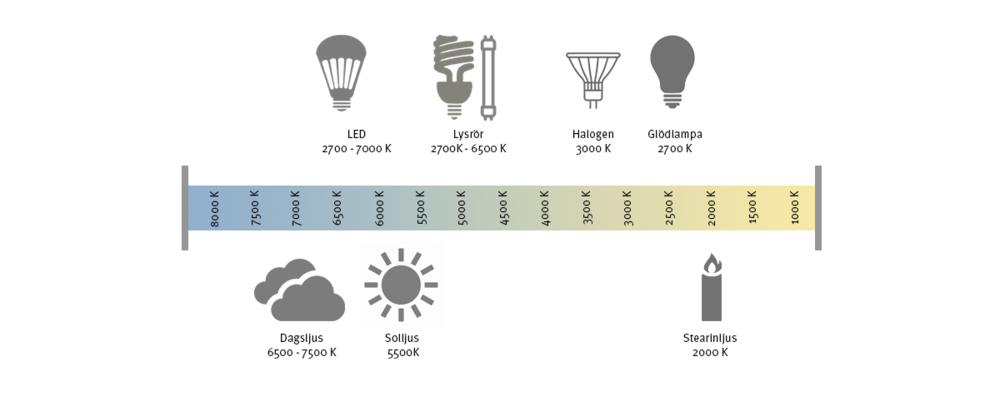
Colour temperature varies depending on the type of light source used, from warm to cool white.
– Candlelight: 2000 K
– Incandescent bulbs: 2700 K
– LED: 2700–6500 K
– Halogen incandescent bulb: 3000 K
– Fluorescent tubes: 4700–6500 K
– Daylight: 5500–7500 K
Which colour temperature is right for me?
If you understand what colour temperature means, it becomes easier to choose lighting that provides the right feel and illumination.
Warm tones
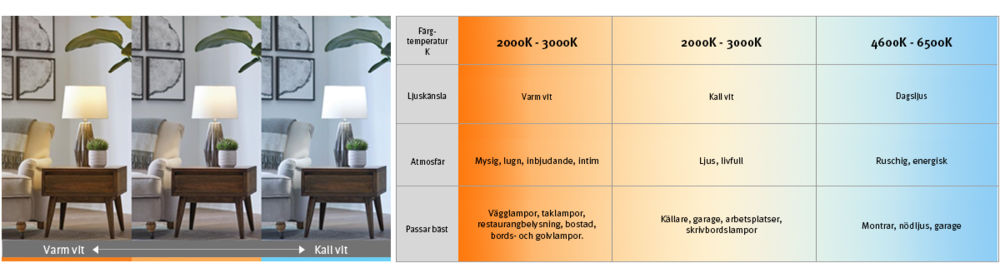
Warm light ranges between 3000K–4000K and has a soft, yellow tint to its white appearance. Lighting with a lower temperature tends to create an inviting and cosy atmosphere where you can relax and unwind. It is also known to reduce eye strain and fatigue and to interfere least with your body’s ability to produce melatonin, the substance that helps you sleep. This type of lighting, commonly referred to as “warm white”, is ideal for intimate spaces such as living rooms and provides a good balance between a relaxing atmosphere and a productive feel.
Neutral tones
Neutral lighting, 4000K–5000K, is very popular for commercial spaces such as shops. LED lamps emit a bright, clean white light and are used in warehouses and supermarkets where there is not much daylight. Like warmer colour temperatures, neutral light does not cause eye strain or other irritations such as headaches. Use neutral white LED lighting if you want to create a good workplace, such as a productive classroom or office.
Cool tones
LED lamps offer the greatest clarity and a crisp, energising atmosphere. They emit an extremely white output with a bluish tint that mimics daylight and are therefore not used in residential settings. The harshness of cooler lighting causes eye irritation and interferes with melatonin production and sleep cycles, but it promotes alertness and productivity, which is why it is often used in factories and offices. As with 5000K, cooler white light can be used to create a lively display area that attracts customers. You will also find 5700K–6000K lighting in car parks and arenas where visibility and activity are important.