
What is LTE?

LTE was developed to meet the growing need for faster and more reliable mobile broadband solutions, and became a natural evolution from 3G and HSPA.

LTE stands for Long Term Evolution and is a standard for wireless data communication in mobile networks. It was developed to meet the growing need for faster and more reliable mobile broadband solutions, and became a natural evolution from 3G and HSPA. LTE was introduced commercially in the late 2000s and has since been the foundation of 4G networks.

Key features and characteristics

  • Higher speed: LTE offers download speeds of up to several hundred Mbit/s and upload speeds of tens of Mbit/s, depending on the network and equipment.
  • Lower delay (latency): Compared with 3G, latency was significantly reduced, often down to 20–30 ms, which improves the experience for real-time applications such as video calls and online gaming.
  • Spectrum efficiency: LTE uses advanced technologies such as OFDM (Orthogonal Frequency Division Multiplexing) and MIMO (Multiple Input, Multiple Output) to use the available frequency spectrum more efficiently.
  • Flexible frequency bands: LTE can be implemented in many different frequency bands, making the technology globally adaptable to different countries’ spectrum allocations.
  • Scalability: The network can be expanded gradually and handle a growing number of users and data without compromising quality.

LTE and 4G

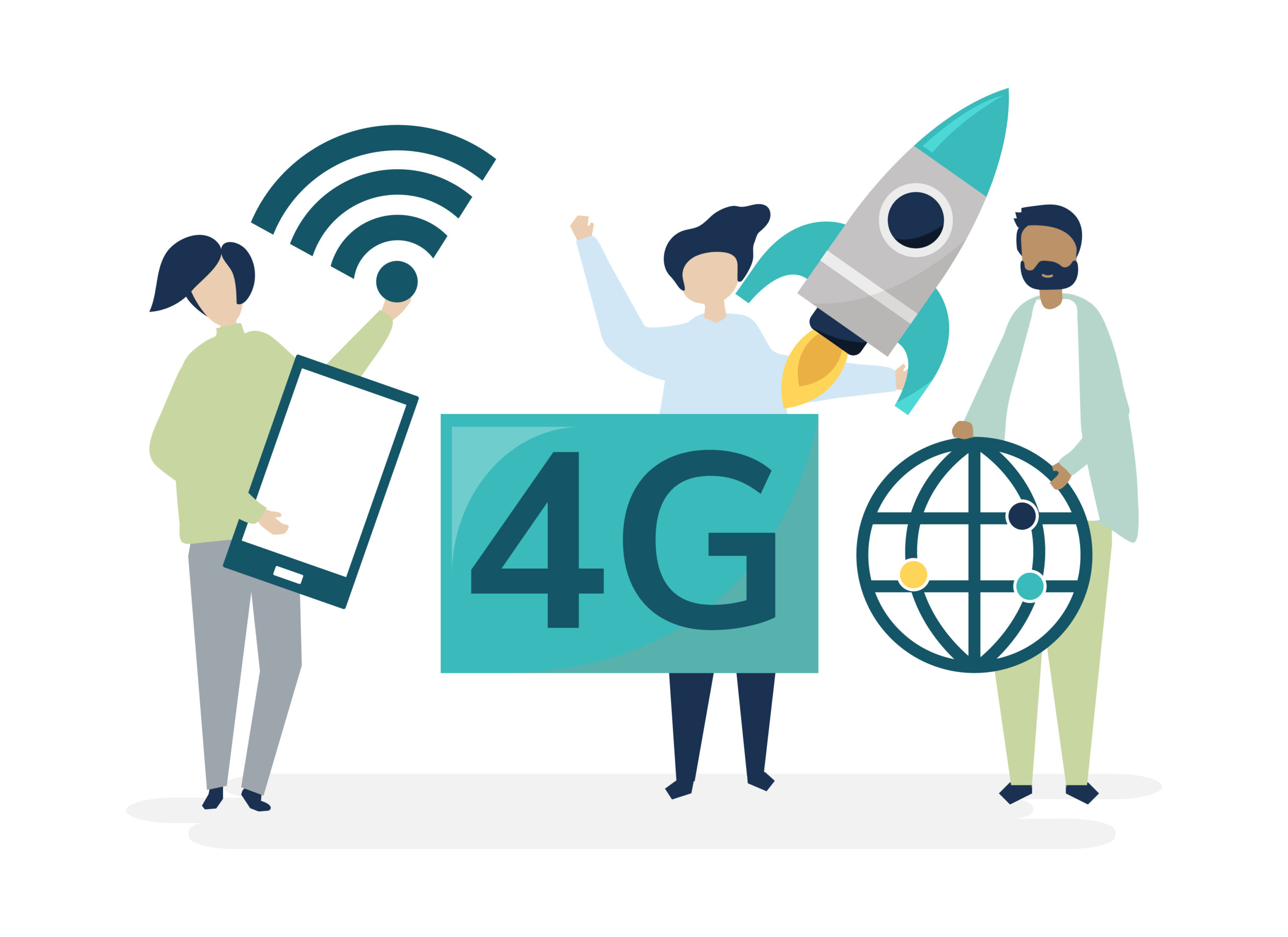
LTE is often marketed as 4G, but technically the first generation of LTE (also known as Release 8) was a transitional solution.

The full 4G standard was only met with LTE-Advanced, which was launched a few years later and provided even higher capacity and support for technologies such as carrier aggregation.

dusty-finger_79d2bb5c

Areas of use

LTE has become the backbone of modern mobile communications and is used for:

  • Mobile broadband: Fast internet access in smartphones, tablets, and modems.
  • Critical applications: For example, emergency services communications, smart grids, and remote control of industrial systems.
  • IoT (Internet of Things): With LTE-M and NB-IoT, the technology can also support energy-efficient connected devices with lower bandwidth requirements.

The road ahead – LTE + 5G

LTE is still a central part of mobile networks worldwide, but development is moving toward 5G. In many cases, LTE and 5G are used in parallel, with LTE serving as the base and being complemented by 5G for even higher performance. This means LTE will remain a key technology for many years to come.

Latest News

Follow our events—here we share news, current projects, and things we believe are worth sharing.

View all

This site is registered on wpml.org as a development site. Switch to a production site key to remove this banner.