From an explosion-protection perspective, it is essential that equipment and installations retain their protective properties throughout the entire service life of the facility.
The electrical installation therefore requires:
• special inspection before commissioning
• regular periodic inspection
• that damaged parts be replaced with original parts.
(Or repaired in accordance with SS EN 60079-19.)
Inspection and maintenance of the electrical installation shall be carried out in accordance with SS EN 60079-17 and only by experienced personnel who have the necessary knowledge of and experience with the relevant types of explosion-protected electrical equipment, the equipment’s installation methods and use, applicable regulations and standards, as well as general principles for area classification. Competence requirements are specified in Annex B of the inspection and maintenance standard SS EN 60079-17 (SEK Handbook 427). Personnel shall be provided with regular refresher training on the relevant installations.

Examples of factors that may affect the interval between periodic inspections and the scope of the inspection include risks of:
– chemical impact, e.g. corrosion
– build-up of dust, dirt or paint
– ingress of liquid
– high ambient temperature
– mechanical damage, e.g. from impact or vibration
– unauthorised modification of the design or of a set value
– inadequate maintenance, e.g. not carried out in accordance with the manufacturer’s instructions
– results of previous inspections.
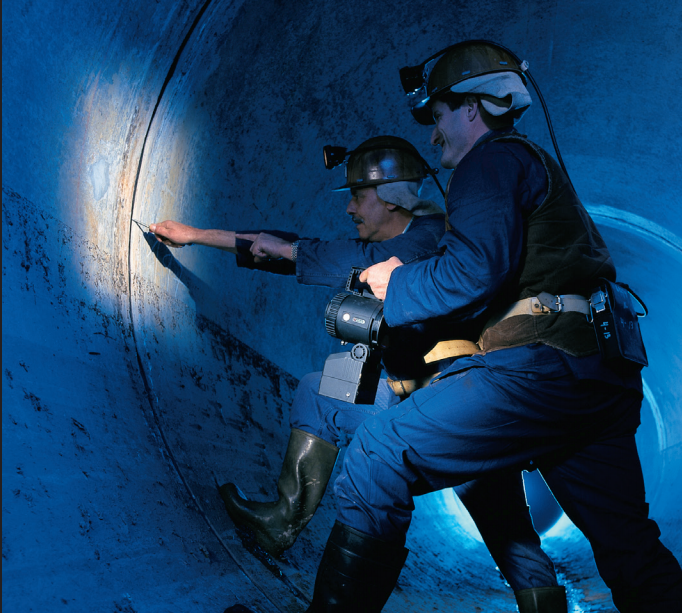
Definitions
Maintenance: a combination of measures carried out to maintain or restore a part of a facility so that it meets the original requirements.
Inspection: a careful examination of a part of a facility, supplemented by, for example, measurement and disassembly, in order to obtain a reliable assessment of the condition of the part of the facility.
Visual inspection: an inspection without the use of tools or equipment to detect visible defects, e.g. missing screws, etc.
Close inspection: an inspection that includes a visual inspection and also identifies such faults, e.g. loose screws, that can only be detected if tools or equipment are used, e.g. a ladder. A close inspection normally means that it is not necessary to open the relevant enclosure or
disconnect the equipment.
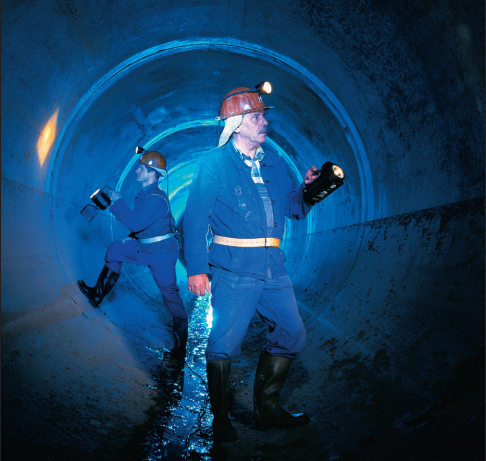
Detailed inspection: an inspection that includes a close inspection and also identifies such faults, e.g. loose connections, that can only be detected by opening the enclosure and, if necessary, using tools or test equipment.
Pre-commissioning inspection: an inspection of all electrical equipment, all systems and installations before they are put into service.
Periodic inspection: a routine inspection of all electrical equipment, all systems and installations.
Sample inspection: an inspection of parts of the electrical equipment, systems and installations.
It should be noted that even if an electrical function produces the intended result, this in itself does not mean that the relevant part of the facility is correct from an explosion-protection perspective.
Installation, operating and maintenance instructions for Ex products
1. Safety instructions
The product is intended for the zone according to the table below.
– This instruction must not be stored inside the device.
– The device shall only be used for its intended purpose.
– Modification of the device is not permitted.
– If cable glands, fittings, flanges, etc. are not correctly selected and properly installed, there is a risk that the explosion protection will not function.
– The electrical safety regulations, ELSÄK-FS 2008:1, and, in the case of an explosive atmosphere from flammable goods, the regulation “On explosive environments when handling flammable gases and liquids” SRVFS 2004:7 and/or, in the case of an explosive atmosphere from other hazardous goods, the regulation “Work in explosive environments”
(dust atmosphere), AFS 2003:3, shall be followed.
Explosive atmosphere: The Swedish standards SS EN 60079-14 regarding electrical installations in hazardous areas and SS EN 60079-17 regarding inspection and maintenance in hazardous areas shall be followed without exception. Both are included in SEK Handbook 427.
2. Installation
– The product shall be transported and stored in its original packaging.
– Installation shall be carried out in accordance with SS EN 60079-14; see SEK Handbook 427. Malux can provide advice.
– Installation and use of explosion-protected electrical equipment require good knowledge of electrical installations in hazardous areas.
– The connecting conductors shall be connected with great care. The insulation shall reach up to the terminals.
– The conductors must not be subjected to damage.
– All connections shall be tightened and sealed, including those not in use. Before commissioning, an inspection shall be carried out in accordance with these instructions and the applicable standard; see item 4.
3. Maintenance and repair
For maintenance, the Swedish standard SS-EN 60079-17 shall be followed; see SEK Handbook 427.
Checklists: For inspection and maintenance, see checklists. Before opening an explosion-protected enclosure with anything other than intrinsically safe circuits within a hazardous area, the electrical equipment shall be de-energised and allowed to cool to a safe temperature.
Repair: No work may be carried out on this device except in consultation with Malux. Only approved original spare parts may be used. For repair of equipment, the standard SS EN 60079-19 provides further guidance.

From an explosion-protection perspective, it is essential that equipment and installations retain their protective properties throughout the entire service life of the facility.
Installation, operating and maintenance instructions for Ex I products
1. Safety instructions
Modification of the device is not permitted and it shall only be used for its intended purpose. The electrical safety regulations, ELSÄK-FS 2008:1 (from 2017-07-01 ELSÄK-FS 2017:?), and, in the case of an explosive atmosphere from flammable goods, the regulation “On explosive environments when handling flammable gases and liquids” SRVFS
2004:7 and/or, in the case of an explosive atmosphere from other hazardous goods (incl. dust), the regulation “Work in explosive environments”, AFS 2003:3, shall be followed.
Explosive atmosphere: Follow the standards SS-EN 60079-11, SS EN 60079-
0 and SS-EN 60079-25 regarding devices, systems and documentation, as well as SEK Hb 427 with SS-EN 60079-14 regarding electrical insta
2. Approved in accordance with the ATEX Directive, regulations and standards
This intrinsically safe product complies with the ATEX Directive 2014/34/EU and ELSÄK-FS 2016:2, as well as the requirements of SS-EN 60079-0 and one or more of SS-EN 50020, SS-EN 60079-11, SS-EN 50281-1-1 and SS-EN 61241-11.
3. Installation
A system description shall be available stating the barrier included, other devices and cable/cables, and showing that they form an intrinsically safe circuit. The barrier’s safety data U0, I0 and P0, as well as the inductance L0 and capacitance C0 that may be connected, shall be stated. The corresponding values Ui, Ii, Pi, Li and Ci for devices in the field circuit shall also be stated. Unless otherwise stated in the device certificates,
the maximum permissible ambient temperature is +40°C.
The product shall be transported and stored in its original packaging.
Installation shall be carried out in accordance with the system description and the installation standard SS-EN 60079-14.
Before commissioning, an inspection shall be carried out in accordance with the installation standard SS-EN 60079-14.
The installer and user shall have good knowledge of intrinsically safe equipment and installations for hazardous areas.