
Protecting personnel and businesses from ignition caused by static electricity cannot be left to chance. In facilities where easily ignitable and flammable products are processed, it is highly likely that static electricity can be generated by the movement of gases, liquids, and solids.
The risks of fire or explosion caused by static electricity in an EX/HAZLOC area are simply too great to ignore. To emphasize its importance, static electricity is identified in North American and European legislation as a potential ignition source in potentially flammable and combustible atmospheres.
To ensure protection against ignitions caused by static electricity, we must follow some basic rules, such as NFPA 77 and IEC 60079-32-1. The most important guideline is to ensure that we can achieve an electrical resistance of 10 ohms or less between electrically conductive plant equipment, including mobile plant, people and vehicles, and an “earth source” verified as a true grounding point. This point will have a low-resistance connection to the general mass of the earth and will transfer electrostatic charge from the equipment to the ground, regardless of how much static electricity is generated by the process. This, in turn, removes the static ignition risk from the processing area. To achieve a safe level of protection against electrostatic ignitions, we must provide an effective means of grounding the equipment. Historically, grounding portable items such as containers, vessels, vehicles, and railcars has been achieved with basic clamps assumed to make a direct connection to the equipment.

Issues such as product build-up and protective coatings (which can prevent contact with the grounding clamp’s connection points), combined with rusty and degraded cable connections, led the industry to develop grounding indicators. Status indicators (commonly referred to as static grounding systems) monitor the connection to the equipment and provide a visual reference to the worker as to whether they have a safe ground connection. A green light indicates that they can proceed with the process. In addition to providing a monitored grounding circuit, many of these systems include output contacts that can be interlocked with the process. Typically, the grounding system’s output contact will be interlocked with the equipment that controls the flow or processing of the product, ensuring that the equipment is grounded before the process that generates static electricity can begin.
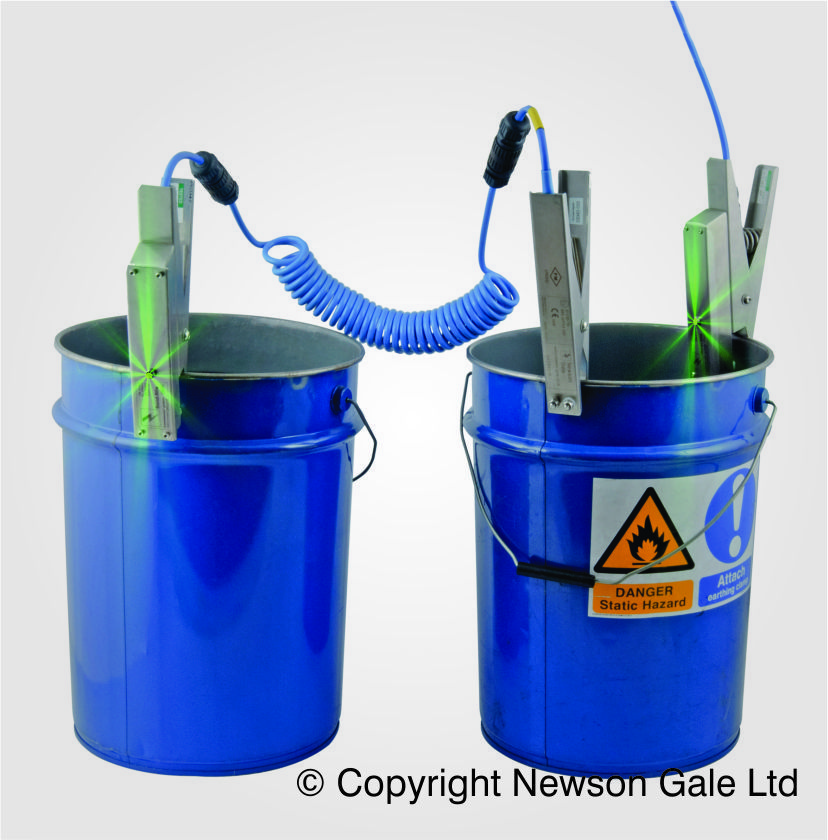
For those tasked with controlling static ignition risks, the choices typically come down to basic clamps, cables, or static grounding systems. Static grounding systems offer the greatest control and protection against static ignition risks, particularly as they can monitor the connection to process equipment, provide operators with a visual indication of a positive ground connection, and shut down the process if the connection is compromised.
Although most would prefer multiple levels of protection against electrostatic ignition risks, it can be difficult to find the budget for processes where many objects require static grounding protection. In addition, some processes that generate static electricity may be operated manually, without automatic safety interlocking. An example of this is facilities that perform manual filling operations of large numbers of drums and smaller containers with flammable liquids.
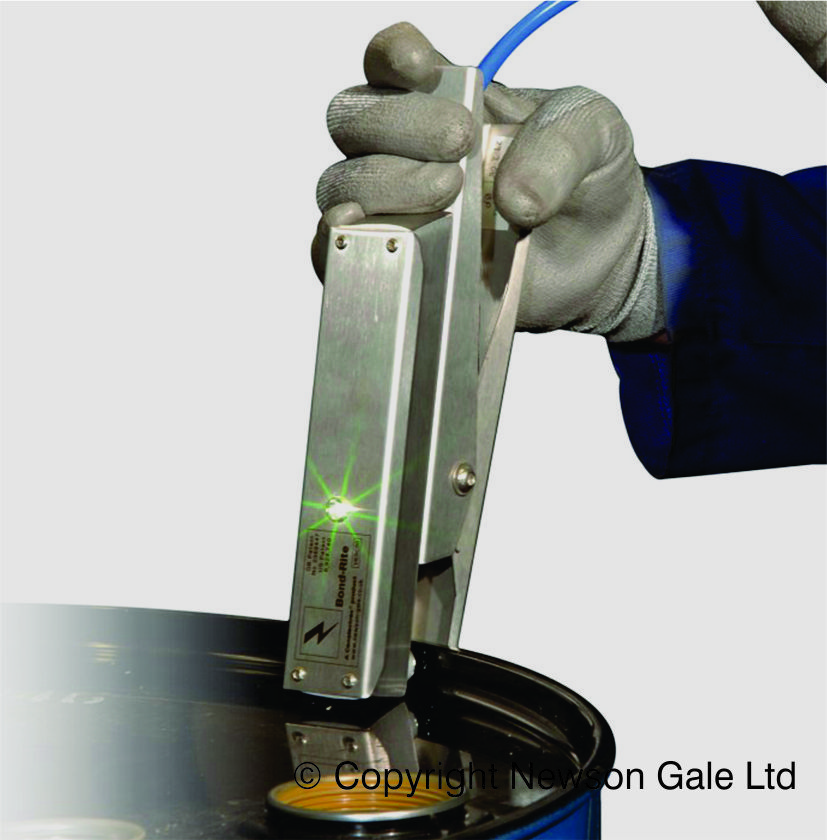
Bond-Rite grounding clamp with indication provides a high level of protection
The Bond-Rite® family of products makes it possible to apply additional controls for electrostatic ignition hazards beyond basic clamps and cables. For 15 years, Bond-Rites have made it possible to raise the safety level by giving workers a visual way to verify a solid electrical connection to the equipment throughout the process. By using the well-known safety principles of GREEN for “SAFE TO GO”, Bond-Rites use a pulsing green LED to indicate when the equipment (e.g., the drum) has a resistance of 10 ohms or less. All Bond-Rites continuously monitor the connection to the equipment until the clamp is removed. The green “SAFE TO” concept is extremely easy for workers to use, enabling them to take responsibility for their own safety and that of their colleagues.
This article is the copyright of Newson Gale – ©Copyright Newson Gale 2019.