
Grounding tankers during the transport of hazardous gas, liquids and powders can be a difficult task due to inadequate driver training (e.g. lowering the trailer legs and connecting hoses before the grounding system has a flashing GREEN LED), lack of routine system maintenance, and weather and ground conditions (snow, ice, rain and salt).
An ideal grounding installation for tankers:
1. Must have a verified ground connection that is routinely checked
by a responsible electrical engineer.
2. Must have a designated grounding point on the vehicle with a metal-to-metal connection to the chassis and tank of less than 10 ohms. Designated grounding points are typically brass pins or stainless-steel lugs and must be clearly identified.
3. Must have a grounding system that complies with industry standards, guidance and recommended practice (IEC TS 60079-32-1, NFPA 77 and API RP 2003).
4. Must have a grounding system installed in accordance with the Ex/manufacturer’s specifications and have routine maintenance carried out by a responsible electrician.
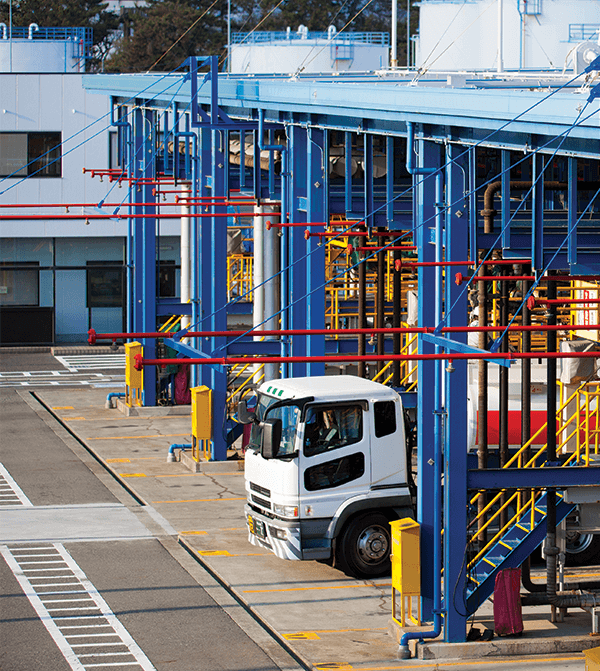
Resistance-based grounding system
Resistance-based grounding systems for tankers provide visual indication and interlocking capabilities. However, their ability to measure low levels of resistance varies enormously.
The Newson Gale Earth-Rite® II PLUS system can monitor the loop from the clamp teeth to the verified ground connection to less than 10 ohms and fully complies with the above industry standards, guidance and recommended practices.
Other competing systems range from a few hundred ohms up to 35 k ohms in the worst example, and they do not comply with any of the above industry standards, guidance and recommended practices.
All resistance-based grounding systems can be “fooled” by users into believing they are connected to a tanker if they are attached to other metal objects, e.g. a spanner, railings, etc. The “why and therefore” for this type of action is highly questionable, but unfortunately it happens regularly.
Impedance-based grounding
Impedance-based grounding systems for tankers provide visual indication and interlocking capabilities. Electrical impedance is the total opposition of an electrical circuit to alternating current, equal to the square root of the sum of the squares of the circuit’s resistance and reactance, and is usually expressed in ohms. Symbol: Z.
Impedance is a complex combination of resistance, capacitive and inductive reactance. Impedance-based grounding systems are usually set up on site because they are affected by cable length/capacitance and environmental conditions. Impedance-based grounding systems do not comply with relevant international standards, guidance and recommended practice. The impedance-based systems may be able to detect the presence of a tanker and infer the resistance of the verified ground, but they cannot monitor the less than 10-ohm loop between the clamp teeth on the vehicle back to the verified grounding point as required in the standards, etc.
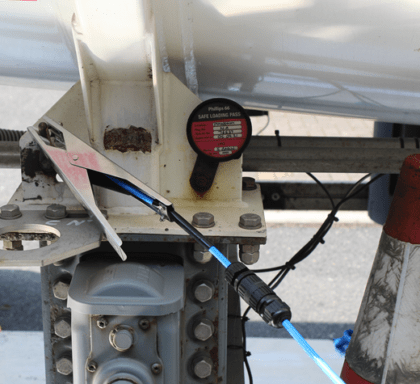
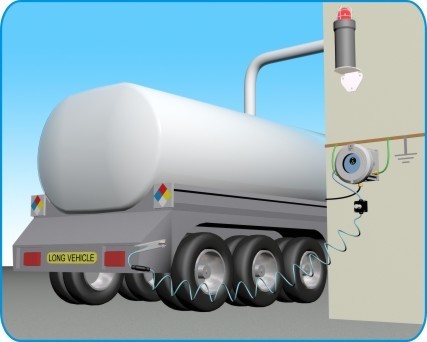
Capacitance-based grounding
Capacitance-based grounding systems for tankers provide visual indication and interlocking capabilities. Capacitance-based grounding systems fully comply with relevant international standards, guidance and recommended practice.
They can detect the typical capacitance signature of a tanker, can verify that the connection to true earth is less than 1,000 ohms and therefore good enough to readily dissipate static electricity, and then switch to continuous ground-loop monitoring to ensure that the resistance between the clamp teeth and the verified grounding point is less than 10 ohms.
Remember to always attach the grounding clamp to the tanker first and obtain a GREEN permissive flashing LED before any other actions are started, e.g. attaching hoses, lowering the trailer legs, moving a loading arm into position over the tanker, etc.
Also, always use a capacitance-based grounding system for full compliance with relevant international standards (IEC 60079-32-1), guidance (NFPA 77) and recommended practice (API RP 2003). They simply work out of the box without calibration or on-site set-up, regardless of conditions.